
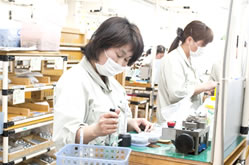
Single-Unit Production
Miki Pulley’s production lines are based on single-piece flow. This process involves inspection, assembly, and then another check, making it easier to detect errors and enhancing quality stability.
April 1, 2015 Miki Pulley Co., Ltd. Koji Miki, President and CEO
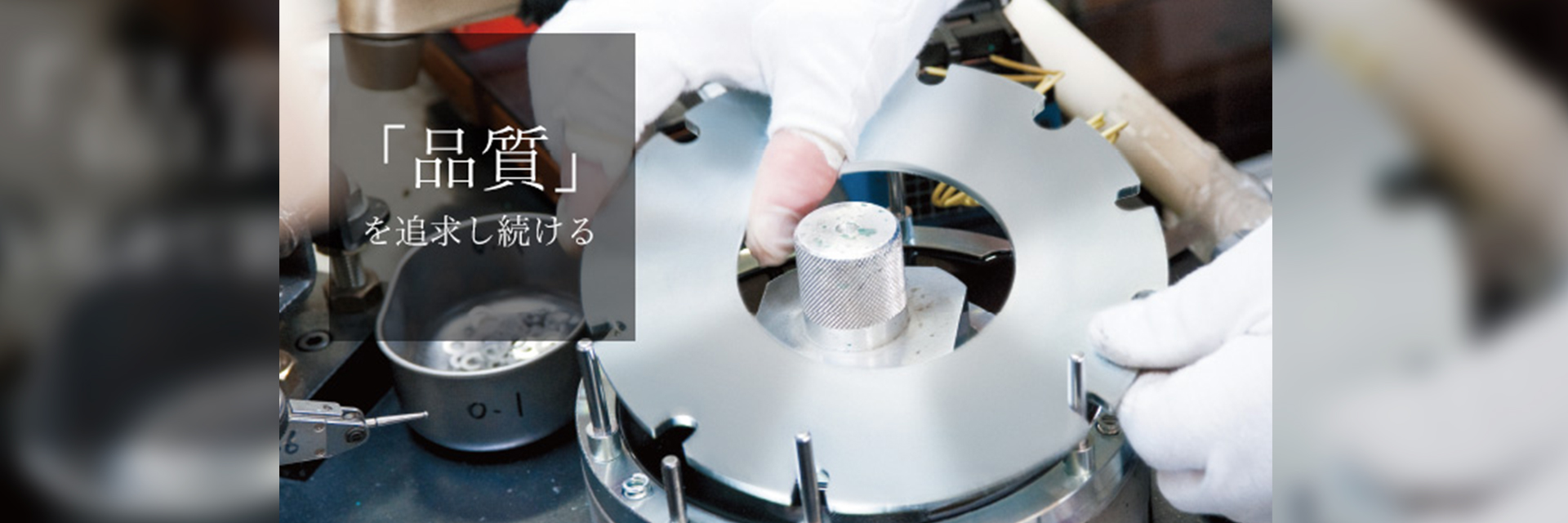
Since its founding in 1939, Miki Pulley has led the field as a pioneer in power transmission and control equipment. I believe we have been able to maintain our leading position for so long because we have continuously embraced new challenges, such as pioneering technologies and production reforms that stay ahead of the times.
Furthermore, our commitment to high quality is one of the reasons we have earned the unwavering trust of our customers. One of Miki
Pulley’s core aspirations is to remain a company that is dedicated to excellence in every aspect—the quality of our products, the quality of our work, the quality of our employees, and the quality of our work environment. We have actively pursued quality improvements and implemented a variety of initiatives to achieve this.
Quality Reform 01
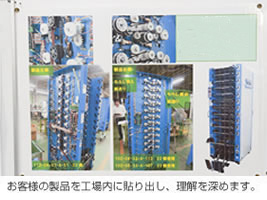
At Miki Pulley, there is something we value highly in the manufacturing process: ensuring that every single member of our production staff understands our customers’ products. We work with a clear understanding of which specific parts of the customer’s product we are manufacturing, where those products are used, and how they contribute to society. Understanding our customers fosters a greater sense of responsibility, and a greater sense of responsibility leads to higher quality. This creates a virtuous cycle. To improve quality, we must first change the mindset of our production staff. We consider this to be of the utmost importance.
Quality Reform 02
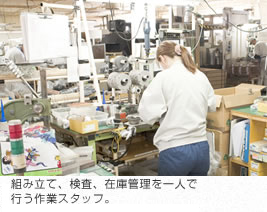
Miki Pulley’s manufacturing process is based on the “stall system.” Each product’s production line functions as a single stall, and each stall has a “shopkeeper” (production staff member).A major benefit of the “Stall System” is that it changes the mindset of our production staff. Under a “division of labor” system, there are people specialized in scheduling, others in gathering parts, and tasks are separated—assembly is separate from packaging. However, under the “Stall System,” a single person handles everything from parts management to delivery schedule management, which fosters a strong sense of responsibility. Additionally, since staff clearly understand who their customers are, their work shifts from passive to active, boosting motivation.It has been several years since we switched from the "division of labor" system to the "one-person-responsibility" system, and the number of defective products has plummeted while quality has improved.
Quality Reform 03
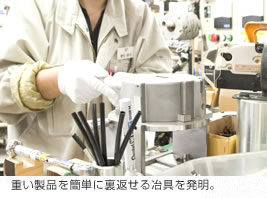
At Miki Pulley, we manufacture our own assembly and inspection equipment, which accounts for more than half of our total equipment. We deploy specialized jigs in processes prone to errors—such as miscounting screws or installing them in the wrong direction—as well as in processes where errors have actually occurred, to prevent defective products. We also build inspection machines tailored to each specific product, ensuring error-free manufacturing.
Quality Reform 04
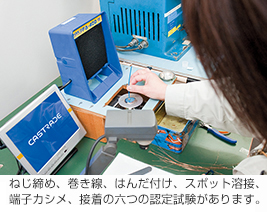
Improving the skills of our production staff is essential for enhancing quality.Miki Pulley not only supports employees in obtaining national vocational skills certifications but has also established its own unique “Six Certification System.” This serves as a qualification for performing specific tasks, and employees cannot participate in product manufacturing unless they pass. All production staff are required to take this exam once a year. Passing the exam does not grant permanent eligibility; instead, it operates on a renewal system, requiring employees to retake the exam annually to ensure the continuous improvement and maintenance of their skills.
Quality is supported not only by large-scale systems but also by small improvements made on the shop floor.
Miki Pulley’s production lines are based on single-piece flow. This process involves inspection, assembly, and then another check, making it easier to detect errors and enhancing quality stability.
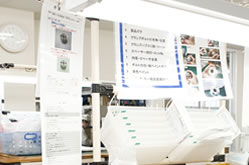
When a defect occurs, we post a sheet summarizing the cause at the worksite to alert everyone and prevent the same issue from happening again.
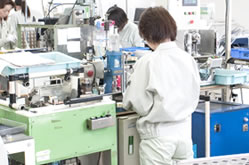
For example, we are working to shorten movement paths by consolidating three workbenches into one. By eliminating unnecessary steps, we reduce the burden on workers and improve accuracy.
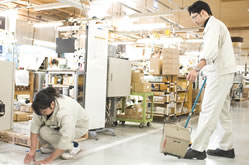
We conduct thorough 5S activities, such as having everyone clean the workspace at a set time every day. This enables us to detect any abnormalities early on, leading to stable quality.
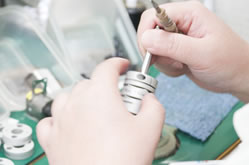
For certain products, we use paint to visually verify that torque wrenches have been tightened correctly. Products cannot be shipped unless they are marked with paint.