
What is a circular economy?
2026/06/15
What Is a Circular Economy? A Veteran Engineer Explains Its Connection to Manufacturing!
What is a circular economy?
Hama-chan: Professor Hashimoto! I saw a "chip compactor" at the machine tool exhibition the other day! Apparently, compressing the chips makes them easier to recycle and helps contribute to carbon neutrality.
Professor Hashimoto: That’s one of the initiatives aimed at creating a “circular economy.” A “circular economy” is a society that uses resources efficiently, recycles them, and reduces the environmental impact. Recently, various industries have been making progress toward a circular economy.
Today, let’s learn about the circular economy!
Why is the circular economy gaining attention?
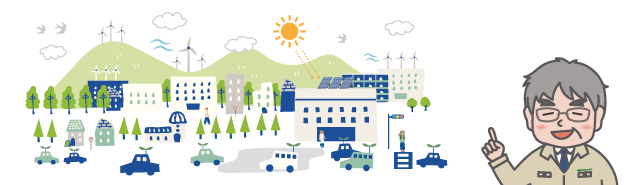
Professor Hashimoto: The "circular economy" is currently attracting attention as a means to solve the problems of "depletion of natural resources" and "waste management" that are currently causing concern, as well as to realize a "decarbonized society," a topic we covered in a previous seminar. We are called upon to rethink the economy of mass production and mass consumption and build a sustainable society.
Depletion of Natural Resources
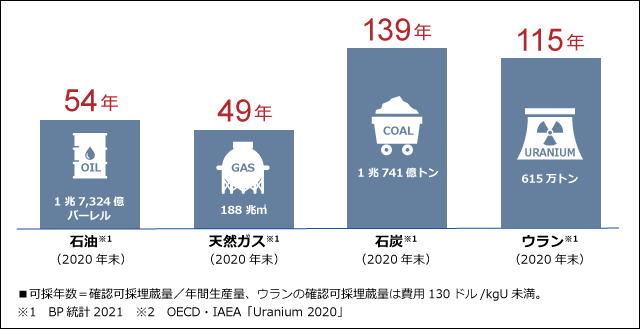
Resources are finite, and it is said that if consumption continues at the current rate, they will be depleted in about 100 years.
■Proven Energy Reserves Worldwide
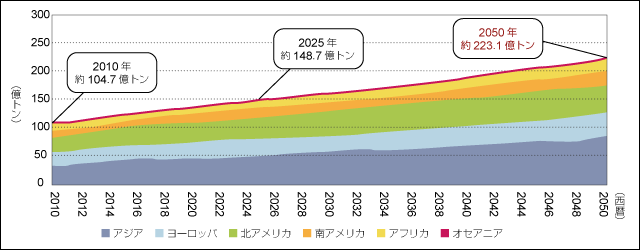
Waste Management
■Trends in Global Waste Generation (Future)
A Decarbonized Society
A society that aims for "zero" emissions of greenhouse gases (CO2), which cause global warming. For more details
, see: Easy-to-Understand Webinar "What Are a Decarbonized Society and the Energy of the Future?"
Hamachan: So, behind our convenient and affluent lifestyles, various problems are arising, aren’t they?
Measures being implemented to achieve a circular economy
Initiatives in Japan
Professor Hashimoto: In Japan, the "Basic Act on the Promotion of a Circular Economy" was enacted in 2000. Based
on that law, the "Basic Plan for the Promotion of a Circular Economy" was formulated, outlining basic policies and target values.
■Basic Plan for Promoting the Creation of a Circular Economy
[Examples of indicators tracking progress on initiatives]
| Integrated Initiatives for Building a Sustainable Society | • Market Size of Circular Economy Businesses • Food Waste from Households and Businesses |
|---|---|
| Regional Revitalization Through the Formation of Diverse Regional Circular Symbiotic Zones | • Per capita daily waste generation • Per capita daily household waste generation |
| Thorough Resource Recycling Throughout the Entire Life Cycle | • Consumption of natural resources (converted to primary resource equivalents) per capita • Recycling Rate by Waste Type at the Output Stage |
| Further Promotion of Proper Waste Management and Environmental Restoration | • Number of incidents of illegal dumping and improper disposal• Remaining capacity of final disposal sites for municipal and industrial waste |
| Establishment of a Comprehensive Disaster Waste Management System | • Rate of formulation of disaster waste management plans |
| Establishing an Appropriate International Resource Circulation System and Promoting the Overseas Expansion of the Circular Economy | • Number of countries with which memorandums of understanding (MOUs) regarding environmental cooperation, including the resource circulation sector, have been concluded |
| Infrastructure development in the recycling sector | • Adoption rate of electronic manifests • Implementation rate of specific 3R actions |
*Items underlined are indicators newly established in the Fourth Circular Economy Plan
[Target Value]
| Fiscal Year 2000 | FY 2015 | FY 2025 Target | |
|---|---|---|---|
| Resource Productivity (10,000 yen/ton) | 24 | 38 | 49 (+102%) |
| Input-side recycling rate (%) | 10 | 16 | 18 (+8 points) |
| Outlet-side recycling rate (%) | 36 | 44 | 47 (+11 points) |
| Final disposal volume (million tons) | 57 | 14 | 13 (–77%) |
*Figures in parentheses indicate the change from fiscal year 2000
Hama-chan: I was surprised to learn that the law was enacted over 20 years ago! So there are a lot of
goals that need to be achieved by 2025.
Professor Hashimoto: In 2021, the Ministry of the Environment launched the “Circular Economy Partnership” to promote Japan’s initiatives both domestically and internationally. Private companies can participate in this as well.
■Circular Economy Partnerships: Case Studies (Selected Examples)
[Reuse of Used Tires] Replacing the worn-out
tread of automobile tires so they can be used again. (Retreaded tires)
[Development of Bioplastics] Plastics made from organic materials, such
as plants, that can return to nature. There are two types: biodegradable plastics, which can be broken down by microorganisms, and those made from biomass
.
Hama-chan: Hama-chan Text
With the global shift toward a circular economy accelerating, it sounds like you’re working on this by strengthening public-private partnerships! I understand the initiatives in Japan, but are there any similar efforts being undertaken overseas? I’d like to know more.

International Initiatives
■Asia-Pacific 3R Promotion Forum
An initiative proposed by Japan and established in 2009 that aims to harmonize environmental protection and economic development in Asia and realize a circular economy. Its purpose is to serve as a framework for cooperation among a wide range of organizations—including national governments, international organizations, and NGOs—in promoting the 3Rs (Reduce, Reuse, Recycle). In addition to Japan, a total of 39 countries, including China, South Korea, Australia, and Singapore, are participating.
■Directive on Reducing the Environmental Impact of Certain Plastic Products (Europe)
In 2019, a bill banning the distribution of single-use plastics was passed. Starting in July 2021, the use of plastic cutlery, straws, and polystyrene containers will be prohibited. The goal is to reduce waste.
What We Can Do to Support a Circular Economy
Hama-chan: So, there are various initiatives underway around the world to move toward a circular economy. Is there anything specific
we can do in our daily lives?
Professor Hashimoto: That’s right. I recommend putting the “3Rs” into practice, which I mentioned earlier in the context of international efforts.
What are the 3Rs?
The 3Rs are an abbreviation for Reduce, Reuse, and Recycle.
■ R (Reduce)
Reduce resource consumption and waste generation at the source
Things you can do: Don’t buy or accept items that will become waste; bring your own bag and refuse unnecessary packaging, etc.
■ R (Reuse)
Reduce waste by using items repeatedly
Actions you can take: Choose products in refillable containers; use flea markets and garage sales to reuse unwanted items, etc.
■R (Recycle)
Reduce waste by reusing materials as resources
What you can do: Sort waste for recycling, actively use recycled products, etc.
Mr. Hashimoto: Until now, thermal recycling—which involves burning waste to recover "thermal energy"—has been the mainstream method in Japan, but recently, there’s been an increase in recycling methods that transform waste into new products or break it down chemically for reuse.
Hama-chan: So recycling methods are changing, too! I want to incorporate the 3Rs into my daily life, like carrying a reusable shopping bag.
Professor Hashimoto: Achieving a circular economy requires effort from each and every one of us. Let’s take a closer look at our daily lives, make small changes, and make sure we can keep it up. I’ve summarized the initiatives in the manufacturing sector below.
Initiatives in the Manufacturing Industry
■Circular Economy Vision 2020
A vision released by the Ministry of Economy, Trade and Industry outlining Japan’s transition to a circular economy. It is positioned as a roadmap for shifting from the 3Rs—reducing, reusing, and recycling—as environmental initiatives to a circular economy as an economic activity.
[Automobiles]
We are shifting to designs that allow for easy disassembly to facilitate recycling.

[Clothes Made of Paper]
Clothing made from Japanese paper or paper yarn, rather than synthetic fibers. Because it is made from natural materials, it can decompose and return to the earth.

[Edible Containers and Cutlery]
Containers and cutlery that can be eaten just like a soft-serve ice cream cone. Eating them helps reduce waste.

[Plant-Based Meat]
Foods made from plants such as soybeans and wheat that mimic the taste and texture of meat. Because they are made from plant-based ingredients, they help reduce greenhouse gas emissions and deforestation compared to animal agriculture.
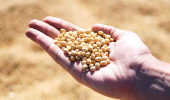
Mr. Hashimoto: More and more products are being developed to help realize a "circular economy."
Hama-chan: So environmentally friendly products are being developed in all kinds of industries, from automobiles and clothing to food.
Professor Hashimoto: Miki Pulley also has products that contribute to this effort.
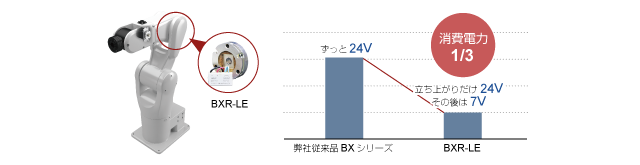
1. Non-excitation Brake (BXR-LE)
・Contributes to energy savings and space efficiency in multi-joint robots
Control via a dedicated controller makes it possible to reduce the voltage during energization to one-third. Its compact design also helps save space. It is used as an emergency stop brake for multi-joint robots and similar applications.
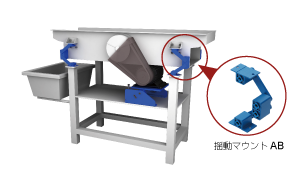
2. Rosta (Swing Mount AB)
・Vibration transmission for vibrating screens*
It reliably transmits oscillatory motion while absorbing vibrations. It reduces
oscillation during resonance to one-fifth, minimizing the impact on floors and buildings. (Compared to coil springs)
*Refers to equipment used to sort waste materials
and debris for recycling.
Mr. Hashimoto: Come to think of it, we once designed screws that were easy to disassemble based on a customer request.
Hama-chan: If they’re easy to take apart, they’ll be easy to recycle too! I want to learn more about the “circular society” and the “circular economy” so I can propose environmentally friendly couplings and brakes!


Supervisor and Instructor
Mr. Hashimoto / Miki Pulley Co., Ltd.
Joined Miki Pulley Co., Ltd. in 1972. As a product manager, he was responsible for marketing and technology, playing an active role both domestically and internationally. In addition, he has been involved in joint research projects not only with companies but also with universities and specialized institutions. He is currently responsible for technical guidance and employee training.
