
What Is Resonance? | Easy-to-Understand Webinar
2026/05/07
What Is Resonance? Explaining the Causes of Vibration in Mechanical Design and How to Address Them!
What are vibration and resonance?
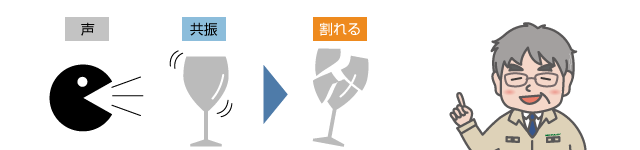
How can a glass shatter just from a voice!?
Hama-chan: Professor Hashimoto! The other day, I saw someone on TV shatter a wine glass just with their voice! It’s amazing that a glass can break just from a voice! What exactly is happening?
Professor Hashimoto: I see. That’s a phenomenon caused by “resonance.” “Resonance” is an important concept that must be taken into account when designing machinery. Today, let’s learn more about “vibration and resonance.”
Sound and Vibration
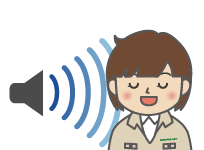
Mr. Hashimoto: First, let’s review sound and vibration. The “sound” we hear is actually “vibrations in the air.” When we tap or rub objects, “vibrations” are generated. These vibrations travel through the air, reach our ears, and are perceived as “sound.” Since vibrations cannot travel without a medium—such as air (a gas), water (a liquid), or metal (a solid)—you cannot hear sound in a vacuum.
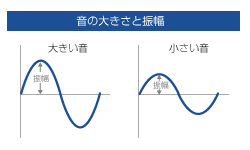
Sound consists of three elements: sound pressure (loudness), pitch (frequency), and timbre (waveform). I’ve put together a table summarizing the details about sound and vibration.
Types of Sound and Vibration
| Sound | Vibration | ||
|---|---|---|---|
| Magnitude | Change in air pressure: Sound pressure: dB (decibels) | Magnitude of amplitude: Depending on the application, displacement, velocity, or acceleration is used | |
 | ・Displacement: m |  | |
| ・Velocity: m/sec |  | ||
| ・Normal conversation: 40–60 dB ・Inside a train: 80–100 dB ・Airplane noise: 120 dB | ・Acceleration: m/sec² | 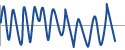 | |
| Frequency | Pitch (i.e., tone height) | Frequency of mechanical vibration | |
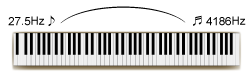
| ・Frequency analysis reveals which part of the object is vibrating to produce the sound ・It identifies the causes of natural frequencies and resonance | ||
| * "Frequency" refers to the number of times a wave repeats per second and is used to describe sound, vibration, electric current, and other phenomena. The unit is Hz (Hertz). | 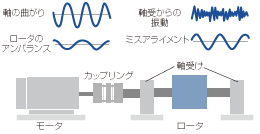 | ||
| Waveform | Timbre | Mechanical Characteristics | |
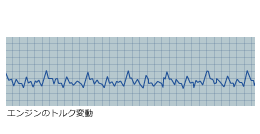
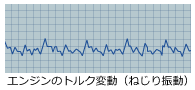
| The "A" note on a tuning fork and violin (440 Hz) The timbre is determined by the overlap of periods that are integer multiples of 440 Hz | ・Engine torque and vibration characteristics can be determined ・Characteristics and abnormalities can be identified from torque fluctuations caused by piston combustion | ||
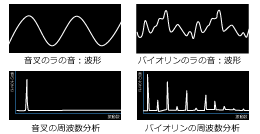 |  | ||
Hama-chan: I see. So there’s a close relationship between “sound” and “vibration,” isn’t there?
Professor Hashimoto: Next, I created a graph comparing "vibration" and "human perception."
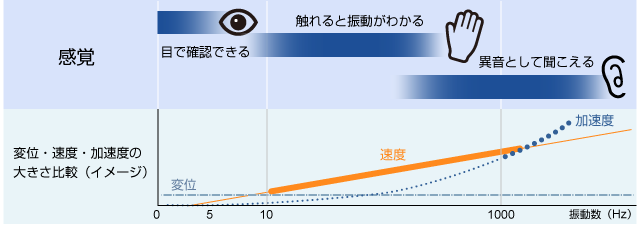
Professor Hashimoto: On the graph, the vertical axis represents amplitude, and the horizontal axis represents frequency. Low frequencies correspond to slow movements, so you can see them with your eyes. Above 5 Hz, you can’t see them with your eyes, but you can feel the vibration when you touch them with your hand. As the frequency gets even higher, you can’t feel it with your hand, but you start to hear it as a noise. The sensors in our eyes, fingertips, and ears are so well-designed that we unconsciously perceive differences in vibration and frequency.
Why do vibrations and resonance occur?
Types of Vibration and Their Mechanisms
Professor Hashimoto: Next, I’ll explain the types of vibration and their mechanisms of occurrence. There are three main types of vibration: natural frequency, forced frequency, and self-excited vibration. Additionally, depending on the direction of vibration, they are classified into linear vibration, bending vibration, and torsional vibration.
| Classification by Vibration Generation Mechanism | ||
|---|---|---|
| Natural Vibration | Forced Vibration | Self-Excited Vibration |
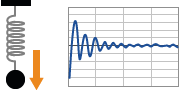
| A phenomenon in which vibration continues even after the external force is removed | Vibration caused by a periodic external force; the vibration frequency changes when the frequency of the external force changes | Vibration occurs due to a non-vibrational external force, oscillating at the natural frequency |
| [Examples] - Natural frequency in the linear direction - Natural frequency in the torsional direction - Natural frequency in the bending direction | [Examples] • Motor speed fluctuations • Unbalance • Engine speed fluctuations | [Specific Examples] • Playing a violin with a bow • Brake squeal • Tacoma Bridge resonance caused by wind-induced Karman vortices |
 |  | 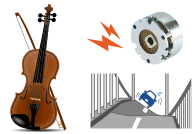 |
Hama-chan: So, in addition to machinery and motors related to mechanical design, everyday items like musical instruments and brakes are also related to vibration. By analyzing "vibration," it seems we can quickly identify the causes of mechanical equipment failures.
Natural Frequency and Resonance
Professor Hashimoto: Objects have their own specific vibration frequencies, which are called “natural frequencies.” Incidentally, humans’ “natural frequency” is said to be between 2 and 5 Hz, and when we encounter this frequency, it feels unpleasant. Seats in vehicles like cars are designed with care to avoid matching this frequency. You can verify the “natural frequency” using measurement systems or calculation formulas. For example, in the case of an engine generator, it can be calculated using the following formula.
■ Simplified Formula for Calculating the Torsional Natural Frequency of an Engine-Generator System
■What is resonance?
This refers to the phenomenon in which, when a vibration is applied at the same frequency as the natural frequency, a vibration occurs that is significantly larger (tens of times greater) than the applied vibration. This resonance factor varies greatly depending on the material. It is said to range from 50 to 80 times for metals and from 5 to 10 times for rubber and plastics. The natural frequencies also differ for the axial, bending, and torsional directions, respectively.
Professor Hashimoto: The performance where a wine glass is shattered by a voice at the beginning is a classic example of this “resonance phenomenon.” You use your voice to vibrate the air, adjust the frequency with pitch, and induce forced vibration in the wine glass. When the “forced vibration frequency” matches the wine glass’s “natural frequency,” a vibration stronger than the one applied occurs, causing the wine glass to shatter.
Hama-chan: So there’s that kind of relationship between “natural frequency” and “resonance.” When and how does “resonance” occur? I’d like to know more about it, including some specific examples.

When does resonance occur?
Various Resonance Phenomena
1. Resonance between the engine and the generator
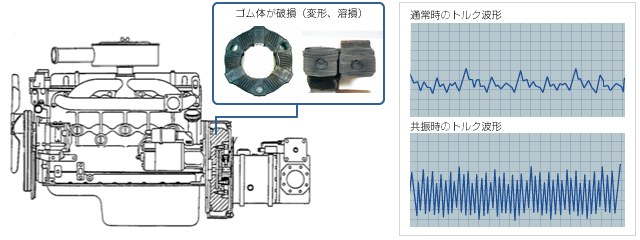
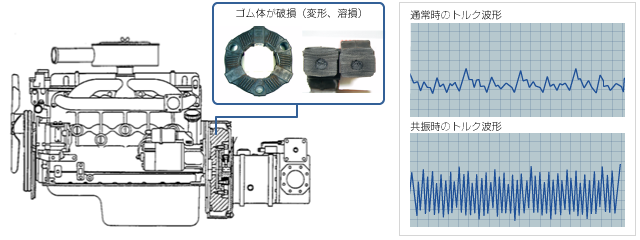
Resonance occurs when the periodic component of the engine’s torque fluctuations matches the torsional natural frequency of the engine generator calculated earlier within a certain speed range, causing the rubber coupling to fail (deform or melt).
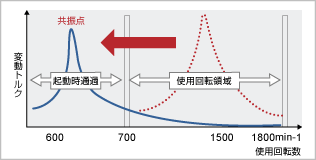
Professor Hashimoto: In the case of an engine-driven generator, as indicated by the red line in the figure on the right, there is a resonance point within the operating speed range. By using a rubber coupling with low torsional stiffness to shift this resonance point to the low-speed range, we can pass through the resonance point during engine startup and avoid it.
Addressing resonance issues is also crucial in rocket engine development. In some cases, the turbine blades in an engine’s turbo pump—which spin at extremely high speeds—can fail due to metal fatigue caused by resonance. Development is currently underway using simulations and actual testing to determine how to design engines to prevent resonance and avoid it altogether.
2. Resonance caused by vibration in servo and stepper motors
Stepping motors rotate in discrete steps and are commonly used in small actuators. Although smooth rotation control is achieved through techniques such as microstepping, there are cases where the motor resonates with the system’s natural frequency within certain operating ranges due to minute vibrations. Similarly, servo motors may resonate with the motor frame due to the motor’s pulsating torque. It is necessary to identify and avoid any potential resonance within the operating range.
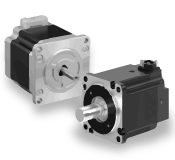
Professor Hashimoto: It’s important to identify the natural frequency of the equipment, the step frequency of the control system, and the resonance speed range, and to avoid (or pass through) them. In some cases, you can avoid resonance points within the operating speed range by either reducing the torsional stiffness of the coupling (using rubber or plastic couplings) or increasing it (using metal plate spring couplings).
3. Vibrating Conveyor Utilizing Resonance
A device that transports objects using vibration. Because the system works by inducing resonance and using that energy to cause the conveyor itself to oscillate, a smaller drive motor is sufficient. On longer conveyors, the number of resonance points (where the conveyor oscillates) increases, enabling smooth transport.
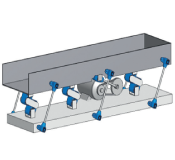
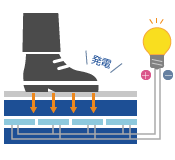
Professor Hashimoto: Recently, devices that generate electricity using vibrations have been developed. Some use piezoelectric elements to generate electricity from even the slightest vibrations, while others can generate electricity from sound or by stepping on mats laid on the floor (sound-powered generation and floor-powered generation).Although resonance and vibration often have a negative image—like causing damage or generating noise—technologies that utilize vibration power generation and resonance can convert them into useful energy. We can also expect them to be used for energy conservation and power storage.
Hama-chan: That’s a brilliant system. I want to really study resonance and vibration so I can apply that knowledge to design and development!


Supervisor and Instructor
Mr. Hashimoto / Miki Pulley Co., Ltd.
Joined Miki Pulley Co., Ltd. in 1972. As a product manager, he oversaw marketing and technical operations, playing an active role both domestically and internationally. In addition, he has been involved in joint research projects not only with other companies but also with universities and specialized institutions. He is currently responsible for technical guidance and employee training.
