
"Using an Alignment Jig" Improve alignment operations with high-precision, pre-assembled couplings! Contribute to extending the service life of your machinery!
2026/05/07

Are you having trouble installing the coupling?
Voices from the Field
It takes half a day to center it
Since precision machinery is assembled with high accuracy, the shafts you want to connect should already be aligned. So why does it take half a day just to align the coupling?
Manufacturing/Front-line worker, 20s

I'm worried that I haven't centered it properly
When connecting a shaft to a coupling, I use a dial gauge to align them, but how do I know when they’re properly aligned?
Manufacturing/Production Engineering, 20s

The production line came to a halt
The production line came to a halt because a coupling broke. I wonder why the coupling broke? This is a real headache, especially since our production schedule is already so tight...
Manufacturing/Front-line worker, 40s


Is the coupling's center pin protruding? If the coupling's center pin is not protruding, installation may take longer, or the coupling may become damaged.
General Methods for Aligning Couplings
Use a dial gauge
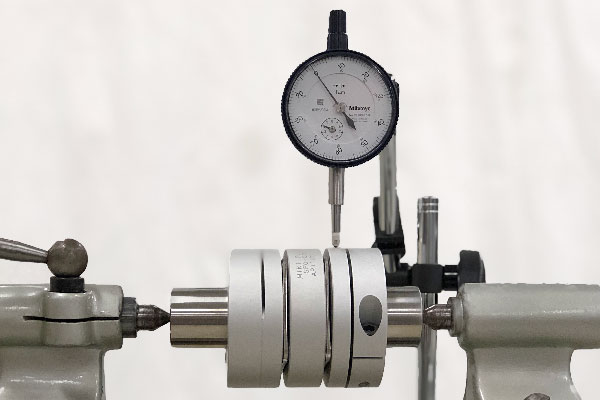
Gently tap the machine with a rubber mallet or similar tool to make fine adjustments, while measuring with a dial gauge. Install the part so that it falls within the tolerance range.
Use a jig
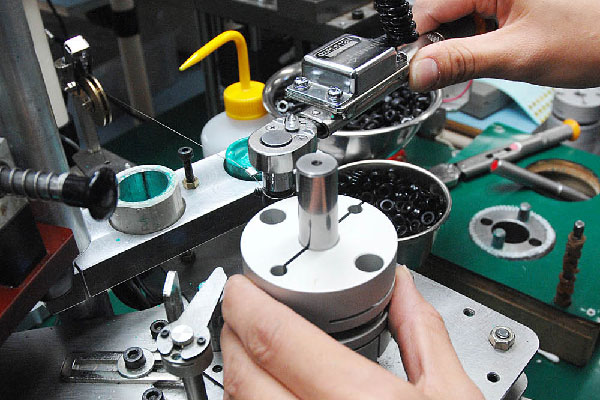
Assembly is performed using a jig designed for alignment. No need to measure with a dial gauge. Using the jig ensures quality.
Both of these options end up taking extra time and money. Isn't there an easier way?

Miki Pulley couplings eliminate the hassle of alignment!
Centering is easy—just change the coupling
Miki Pulley uses alignment jigs to assemble metal plate spring couplings. Since the couplings are delivered in an aligned state, they can be installed immediately as long as the shafts are properly aligned. Additionally, using properly aligned couplings offers the advantage of minimizing runout in the driven shaft caused by shaft reaction forces.
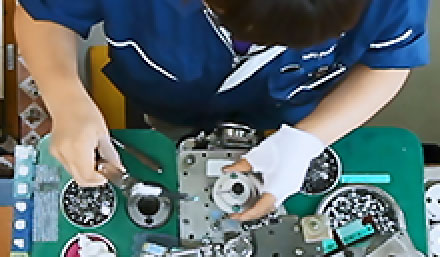
The coupling hub and leaf springs are assembled using jigs with high concentricity. Furthermore, assembly is performed by workers who have passed Miki Pulley’s six proprietary certification tests, including screw tightening and wire winding.
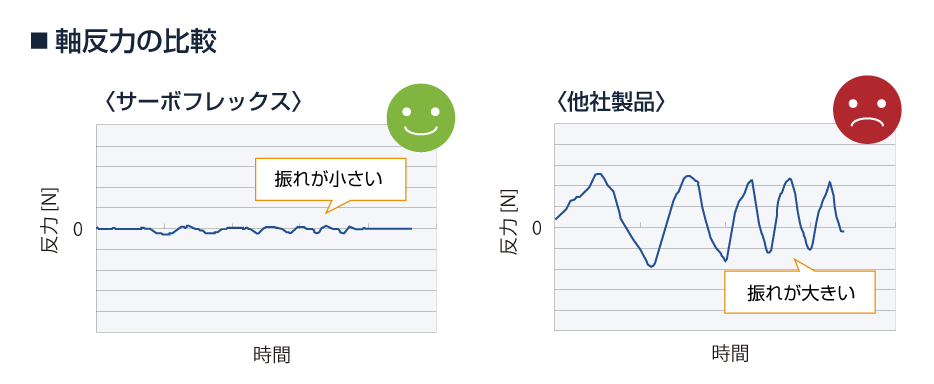
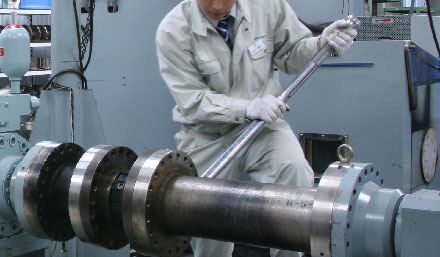
By preventing damage to couplings and machinery, you can reduce the risk of production line downtime!
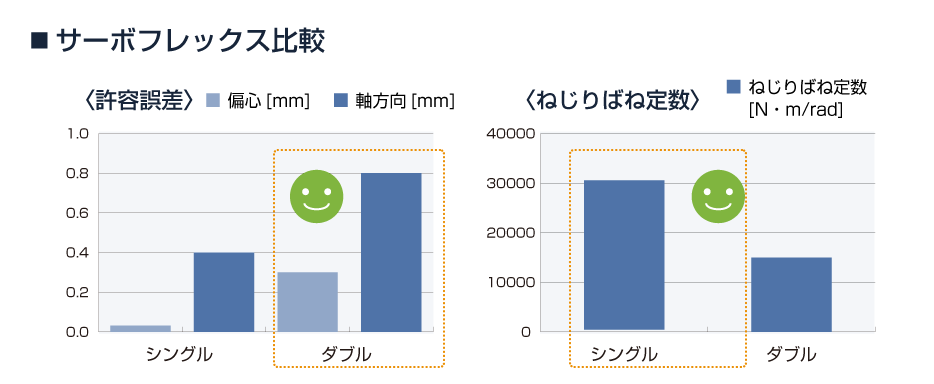
Prevent damage by choosing the right coupling!
Contributing to the extended service life of machinery
Using a coupling with a protruding shaft can help prevent unexpected damage. It also absorbs misalignment between shafts (installation errors), as well as vibration and shock, thereby preventing machine failure. Selecting the right coupling for your machine is essential for reducing downtime!
Comparison of Metal Plate Spring Couplings (SFC) *See figure on the left
- Single-type: Emphasizes tracking performance and offers higher rigidity.
- Double type: Due to its larger tolerance, it can accommodate greater misalignment.
- Easy to install.
Please feel free to contact us
Case Studies: How We Solved These Challenges
With couplings that accommodate misalignment, you can significantly reduce alignment time!
Manufacturers of electronic component manufacturing equipment
| Background | A rigid coupling is used on a drilling machine (a machine used to drill holes in workpieces). |
|---|---|
| Challenges | It takes a long time to center the workpiece, and only experienced workers can handle it. |

We recommend the Metal Plate Spring Coupling (SFC)
Solution
Miki Pulley’s metal plate spring coupling (SFC) is pre-aligned, making it easy for anyone to install. Furthermore, thanks to its excellent flexibility, it accommodates misalignment, significantly reducing the time required for alignment during assembly.
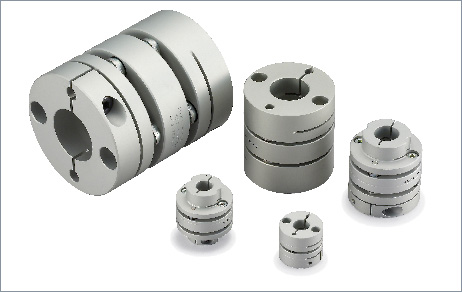
We will recommend the best product for you
6 Key Points for Centering
Please check this if you're having trouble with installation.
- Have you selected the right coupling for your machine?
- Have you centered the coupling?
- Have the shafts of the machine (driven shaft and drive shaft) been properly aligned?
- Have you aligned the shaft and coupling?
- Is it mounted on the shaft beyond the permissible range (tolerance)?
- Did any dust or unusual noises occur during the test run?
We’ll select the perfect match based on your concerns
Please feel free to contact us